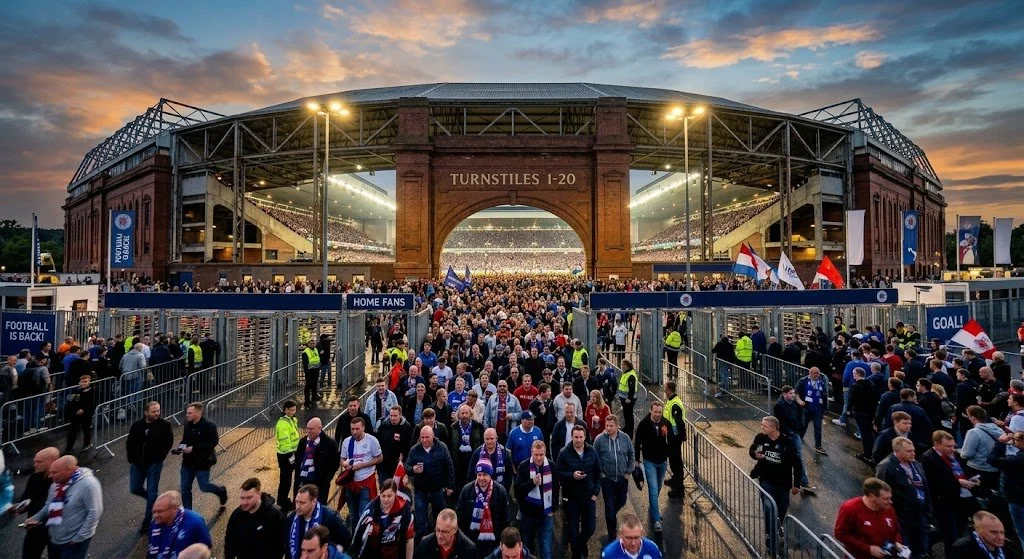
Stadium operations management is the hidden engine that powers every modern sporting event, concert, and mega-gathering. While tens of thousands of fans focus on the pitch or the stage, stadium operations teams manage crowd logistics, physical security, smart venue technology, and environmental sustainability.
In Sport Facility Operations Management: A Global Perspective (2025), Schwarz, Hall, and Shibli define operations management in a sports context as:
"...the maintenance, control, and organisational activities that are required to produce products and services for consumers of the sport facility."
This definition op sports operations management encompasses the ongoing maintenance, control, and systemic improvement of facility processes. The purpose of operations management is to efficiently turn physical and human inputs into tangible products (equipment, food and beverage, merchandise) and services (hosting events, fan experiences, recreational activities).
Translating a massive facility into a safe, seamless, and profitable venue requires a synchronised operational strategy built across four key pillars.
Operations Management pillars
1. Crowd Logistics
The operational efficiency of a stadium is frequently judged within the first thirty minutes of a fan's arrival. Modern stadium management relies on predictive crowd modelling and integrated ticketing software to prevent bottlenecks at entry turnstiles and security zones.
Ingress & Egress: Operational staff utilise real-time heat mapping and computer vision from CCTV streams to track crowd accumulation at gates and transit hubs. If queues build rapidly at a specific turnstile, the control room alert operations managers to re-route security personnel or convert nearby exit gates into temporary entry lanes.
Zonal Operations: Large venues divide their footprints into micro-zones, assigning dedicated facility teams, medical first responders, and security leads to specific concourses. This decentralised model ensures quick response times without leaving other areas of the stadium unmonitored.
2. Smart Venue Infrastructure
Managing the physical plant of a stadium demands continuous oversight of lighting, power grids, and digital networks. Venue management systems rely heavily on smart technology to optimise utility usage and maintain asset readiness.
Smart Building: Smart environmental controls can automatically balance air circulation and temperature, drastically cutting energy waste during multi-hour events.
Maintenance: Rather than reacting to unexpected equipment failures during match days, operations teams use smart technology on critical infrastructure such as elevators, escalators, and water pressure systems, to schedule repairs well before parts fail during a peak event window.
3. Concession Logistics and High-Speed Retail Operations

Great book by Schwarz et al (2025)
Food, beverage, and merchandise concessions form a major revenue stream, but long queue times directly diminish the fan experience and reduce sales throughput. Operational efficiency in concessions is driven by supply chain precision and rapid-checkout configurations.
Automation: Modern stadium concourses feature automated inventory tracking tied to real-time Point-of-Sale data. Operational staff receive automated alerts when specific stands run low on stock, triggering runner teams to replenish supplies.
Commercialisation: The integration of cashier-less "walk-in, walk-out" concession stores powered by overhead camera arrays and weight-sensing shelves, has transformed halftime operations. By removing manual cash transactions, stadium managers process hundreds of orders in minutes, allowing concourses to handle massive demand spikes without overcrowding.
4. Safety, Incident Command, and Sustainability
At the centre of stadium operations management is the event control room. This hub brings together stadium staff, local law enforcement, emergency medical services, and transport authorities under one unified command structure.
Incident Command Protocols: From a minor medical emergency that occurs in the upper deck or a power anomaly affecting the broadcast truck park, the operations team responds.
Sustainable Operations: Facility operations are increasingly evaluated on environmental targets. Sustainable stadium management incorporates zero-waste-to-landfill programs, back-of-house composting sorting, and on-site water filtration systems to handle post-event cleanup swiftly and ecologically.
To summarise
Schwarz et al. (2025) define sport facility operations management as the systematic maintenance, control, and enhancement of activities required to deliver products and services to sport facility consumers. Their perspective highlights two essential foundational points:
First, operational scope is process-driven and continuous. Facilities must go beyond day-to-day survival by integrating structured maintenance, strict operational control, and continuous process improvement. This ensures that physical infrastructure, venue safety, staff workflows, and resource allocation function efficiently and reliably across all events.
Second, service delivery centers entirely on the consumer experience. The ultimate objective of facility operations is turning operational inputs into high-quality tangible offerings (such as equipment, food, and merchandise) and intangible services (such as spectator engagement, athlete hosting, and event administration). By prioritising fan and participant satisfaction, effective operations management directly drives business sustainability, venue reputation, and overall commercial success in the competitive sports industry.