Crowd Safety
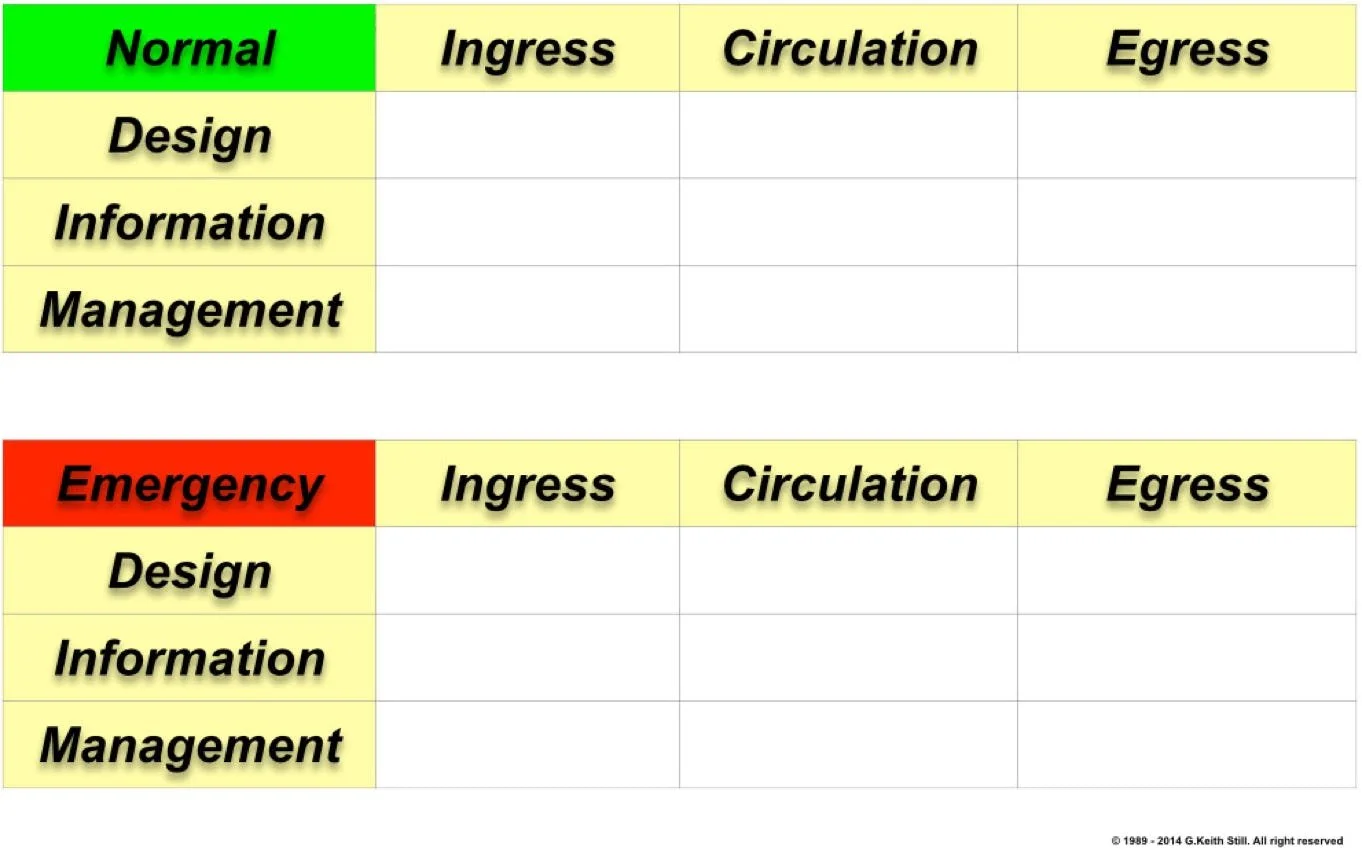
The DIM ICE model, developed by crowd safety expert Professor Dr. G. Keith Still, is a foundational framework used in crowd science to analyse, assess, and manage risks in places of public assembly. It breaks down complex crowd dynamics into a structured 3x3 matrix, evaluating three primary influences against three sequential phases of an event.
Understanding the DIM ICE Model
The DIM ICE model evaluates crowd risk by examining how human dynamics interact with environmental and operational controls.
DIM ICE model by Prof. Still
The matrix organises these risks into two dimensions:
The Three Influences (DIM)
Design (D): The physical architecture, geometry, layout, and spatial limitations of a venue. This includes flow rates, neck points, barriers, turnstiles, footprint sizing, and maximum capacity limits.
Information (I): The communications given to the crowd before, during, and after an event. This covers static signage, digital displays, PA announcements, social media updates, tickets, and stewarding verbal directions.
Management (M): The human operational framework, policies, and procedures running the event. This includes police and steward deployment, security screening, crowd monitoring, decision-making hierarchies, emergency action plans, and access control.
The Three Event Phases (ICE)
Ingress (I): The phase where crowds arrive, assemble, queue, pass through security checkpoints, and enter the venue footprint.
Circulation (C): The movement of people inside the venue boundary, such as moving through concourses, buying concessions, finding seats, or accessing restrooms.
Egress (E): The post-event phase involving movement out of the venue, dispersal into the surrounding area, and transport integration.
Case Study: Copa América 2024 Final (Miami)
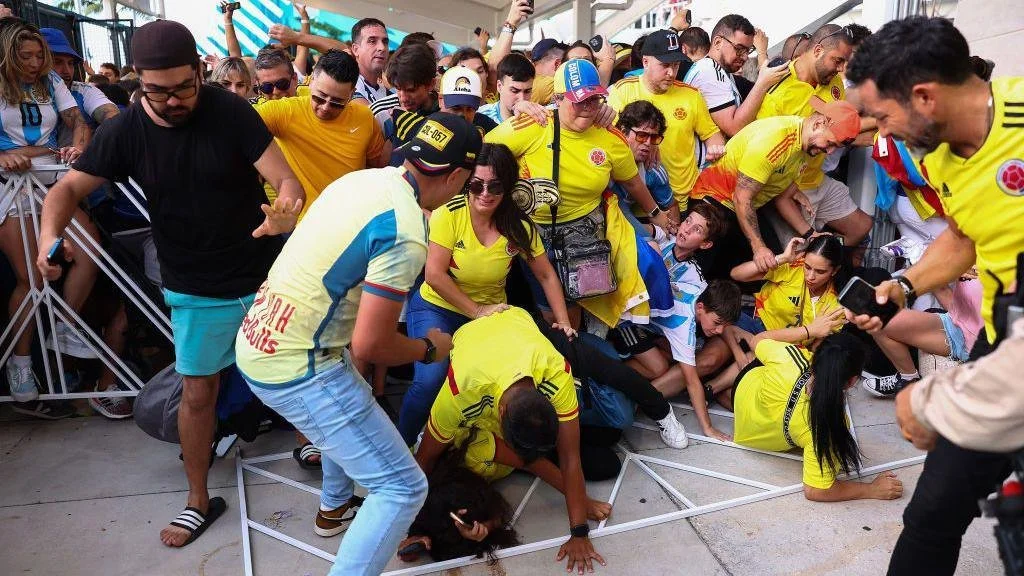
On July 14, 2024, the Copa América Final between Argentina and Colombia at Hard Rock Stadium in Miami Gardens, Florida, collapsed into severe operational chaos. Thousands of unticketed fans stormed the perimeter, breached security checkpoints, climbed air vents, and forced stadium management to delay kick-off by over 80 minutes.
Applying Still’s DIM ICE model reveals how critical breakdowns across Design, Information, and Management caused systemic failure.
Applying DIM ICE to the Copa América Final
1. Ingress Failures

Chaos at the final in 2024
Design (Ingress): Hard Rock Stadium was designed primarily for American NFL events, where crowds generally follow ticketed, orderly arrival profiles. The perimeter lacked a robust, multi-layered "concentric rings of security" setup. The single hard perimeter allowed non-ticketed fans to mix directly with ticketed attendees right at the entry gates, generating extreme crowd density.
Information (Ingress): Pre-event communications failed to set clear boundaries for non-ticketed fans. In Latin American football culture, thousands of fans gather outside match venues purely for the atmosphere ("tailgating" without tickets). Organisers failed to communicate that the stadium footprint was strictly off-limits without a ticket, creating false expectations.
Management (Ingress): Stewards and police officers were overwhelmed. When crowd pressure escalated at the outer turnstiles, authorities temporarily locked down the gates. This reactive decision intensified crowd packing, exposing fans (including children and the elderly) to dangerous crushing forces and heat exhaustion in the South Florida humidity.
2. Circulation Failures
Design (Circulation): Weak physical security infrastructure allowed fans to scale perimeter fencing, breach escalators, and crawl through air ducts and drainage systems to bypass concourse checkpoints. The venue’s structural design lacked hard barriers to isolate unscreened individuals from ticketed concourses.
Information (Circulation): Communication inside the stadium broke down. Ticketed spectators arrived at their assigned seats only to find them occupied by unticketed fans who had stormed the breaches. Stadium public address systems provided minimal guidance on how to resolve seating disputes or navigate congested aisles.
Management (Circulation): To prevent a fatal crush outside the locked gates, management made the operational decision to temporarily open gates completely and sweep thousands of unscreened, unticketed fans directly into the concourses. This eliminated security screening, flooded concourses beyond safe capacity limits, and created severe fire safety and security hazards.
3. Egress Failures
Design (Egress): To regain control of the breached stadium, operational staff padlocked and barricaded multiple exterior exit gates. While this stopped further unauthorised entry, it severely compromised emergency egress routes, creating structural bottlenecks for legitimate exits.
Information (Egress): Attendees received inconsistent messaging regarding match postponements, gate closures, and exit procedures. Confusing guidance led to counter-directional crowd flows on major concourses, with people attempting to exit bumping into groups seeking entry.
Management (Egress): Post-match egress required heavy law enforcement intervention to clear lingering, angry crowds around egress routes. Alcohol sales were cut off, and egress was strictly regimented to prevent secondary rushes. While a fatal disaster was avoided, thousands of paying ticket holders were permanently locked out and denied entry altogether.
Key Takeaways for Major Event Security
Applying the DIM ICE model highlights that the Copa América 2024 final failed primarily due to an operational mismatch between venue management strategies and crowd profile dynamics.
Rings of Security: Major international sporting events require multi-tiered perimeter checks miles or hundreds of yards out to filter non-ticketed fans long before they reach hard entry turnstiles.
Crowd Profiling: Safety plans must account for specific fan demographic behaviours, emotional intensity, and gathering habits rather than assuming a standard domestic sports audience profile. Crowd profiling is key.
Information Control: Information must be delivered early, dynamically, and across multiple languages to manage crowd expectations long before structural design limits are tested.