Continual improvement for sports organisations
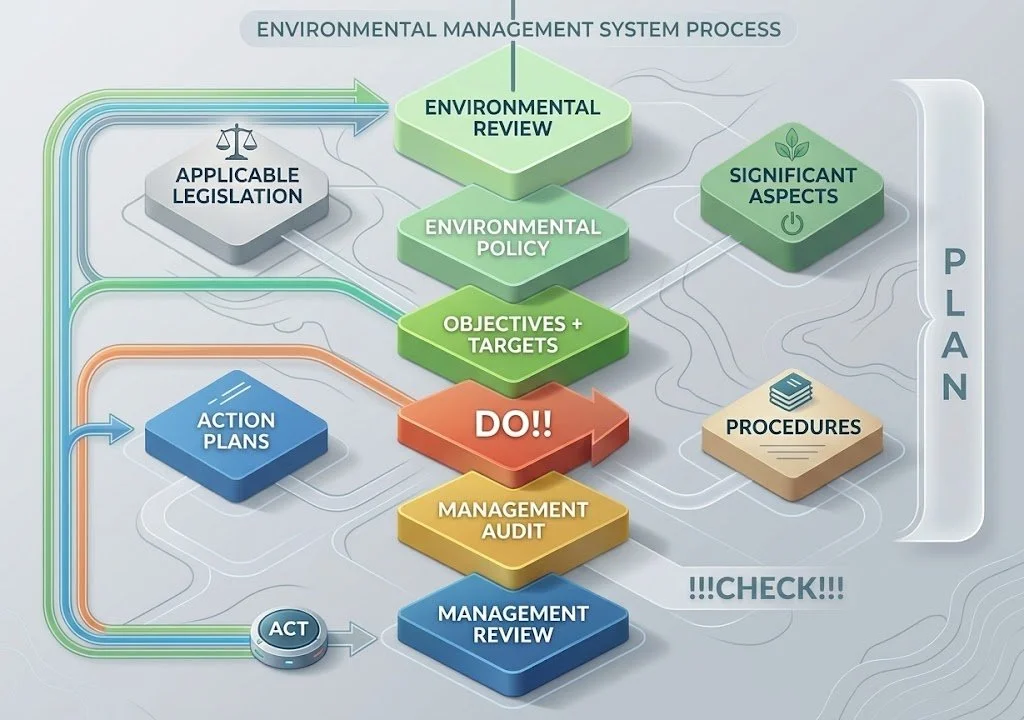
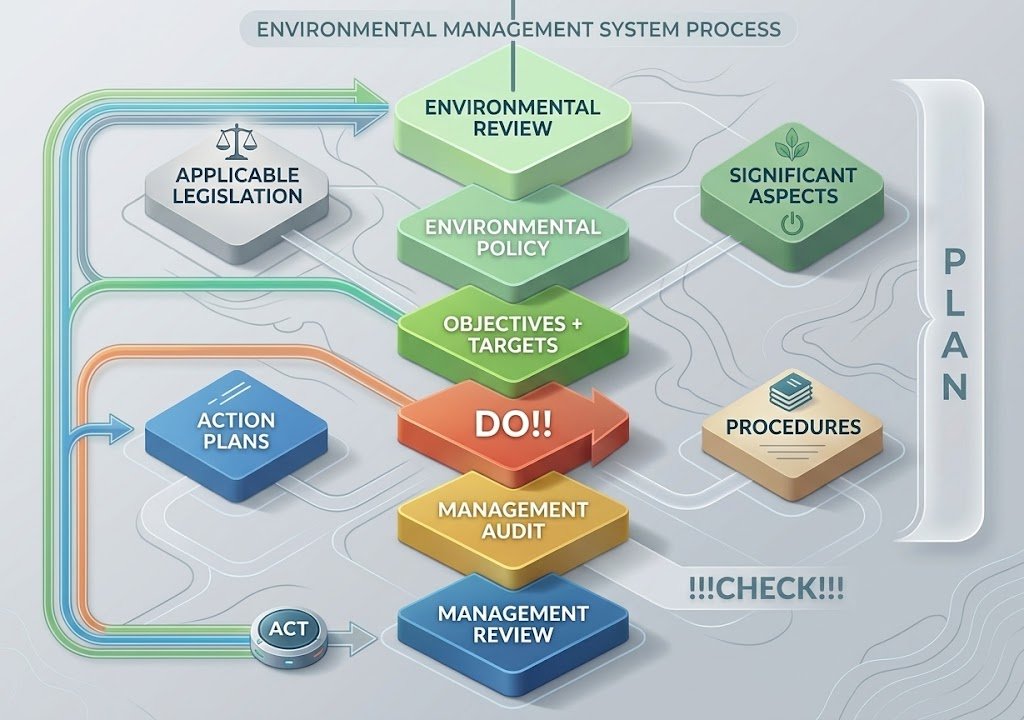
The diagram provided illustrates the classic Plan-Do-Check-Act continuous improvement cycle that underpins management system standards such as ISO14001 and ISO20121:2024 Event Sustainability Management Systems.
ISO20121:2024 provides a framework for organisations involved in event delivery to identify, manage, monitor, and improve the environmental, social, and economic impacts of events. The standard applies to event owners, venues, stadiums, arenas, governing bodies, promoters, and suppliers.
For stadium and event managers, ISO20121:2024 offers a structured approach to embedding sustainability into everyday operations while maintaining financial viability and delivering positive stakeholder outcomes. The revised 2024 edition places greater emphasis on inclusivity, human rights, legacy impacts, stakeholder engagement, and continual improvement.
ISO20121 made easier
Using the Diagram to Explain ISO20121:2024
The image illustrates the key stages of a sustainability management system.
1. PLAN
The planning phase forms the foundation of ISO 20121.
Environmental Review
The first step involves conducting a comprehensive review of sustainability impacts associated with stadium operations and events. For a football stadium, this may include:
Energy consumption
Water use
Transport emissions
Waste generation
Food sourcing
Community impacts
Accessibility and inclusion
For example, a 60,000-seat stadium hosting football matches, concerts, and conferences would assess the impacts generated by spectators travelling to events, catering operations, security services, and facility maintenance.
Applicable Legislation
The diagram highlights the need to identify all relevant legislation. A stadium would examine:
Health and safety regulations
Waste management legislation
Carbon reporting requirements
Employment law
Equality and accessibility legislation
Procurement requirements
Compliance becomes the minimum baseline for sustainability performance.
Significant Aspects
After reviewing impacts, management identifies the most significant sustainability issues. Collecting the correct data is important. For most stadiums these are likely to include:
Spectator transport emissions
Energy consumption
Food and beverage sustainability
Waste and recycling performance
Community engagement
ISO 20121 requires organisations to prioritise these material issues rather than attempting to address every issue equally.
Sustainability Policy
The stadium then develops a sustainability policy outlining its commitments. This policy should feed into the different operational departments within the organisation. An example policy may state:
"The stadium commits to reducing carbon emissions, eliminating avoidable waste, supporting local communities, promoting inclusion, and creating a positive legacy from all events."
Objectives and Targets
Measurable objectives are critical. A stadium could establish targets such as:
Reduce event waste by 40% within three years.
Source 70% of food locally.
Increase spectator use of public transport to 80%.
Reduce operational energy consumption by 25%.
These targets convert aspirations into actionable goals.
2. DO
The "Do" phase concerns implementation.
Procedures
The diagram shows procedures supporting execution. A stadium develops documented processes covering:
Waste segregation
Energy management
Sustainable procurement
Accessibility services
Volunteer management
Supplier engagement
Stakeholder communication
For example, food vendors may be required to use compostable packaging and demonstrate sustainable sourcing practices.
Action Plans
Action plans identify responsibilities, resources, timelines, and performance indicators. A transport action plan might include:
Enhanced public transport messaging
Improved cycling facilities
Electric vehicle charging stations
Partnership agreements with local transport providers
Similarly, a waste reduction plan may include reusable cup schemes, food donation programmes, and recycling infrastructure. The key principle is that sustainability moves from strategic intention to operational delivery.
3. CHECK
The "Check" stage determines whether objectives are being achieved.
Management Audit
ISO20121 requires systematic auditing and performance evaluation. A stadium monitors:
Waste diversion rates
Energy usage
Water consumption
Carbon emissions
Community investment
Stakeholder satisfaction
For example, following a season of events, management may find that waste recycling increased from 60% to 85%, while public transport usage remained below target. Audits identify areas where performance is strong and areas requiring improvement. Importantly, ISO 20121 focuses on evidence-based decision-making rather than marketing claims.
4. ACT
The final stage involves continual improvement.
Management Review
Senior leadership analyses audit findings and determines corrective actions.
Management reviews may conclude that:
Additional recycling stations are required.
Catering suppliers need sustainability training.
Ticketing systems should better promote public transport.
The outcomes are then fed back into the next planning cycle. This continual improvement loop is the essence of ISO 20121 and allows venues to continually enhance sustainability performance year after year.
How a Stadium Can Use ISO20121:2024
Modern stadiums are increasingly applying ISO 20121 because they function as complex event ecosystems. A typical stadium applies the framework across six major areas:
1. Energy Management
Stadiums can:
Install LED lighting
Use renewable electricity
Improve building management systems
Monitor event-specific energy consumption
2. Waste Management
Measures may include:
Recycling infrastructure
Composting food waste
Reusable cup schemes
Eliminating single-use plastics
3. Sustainable Procurement
Suppliers are assessed according to:
Environmental performance
Ethical sourcing
Labour standards
Local economic contribution
4. Transport Planning
Because fan transport often represents the largest source of event emissions, stadiums may:
Promote rail travel
Enhance cycling facilities
Introduce electric vehicle charging
Coordinate event scheduling with public transport providers
5. Community Impact
ISO 20121 extends beyond environmental concerns. Stadiums can:
Support local employment
Donate event tickets
Partner with community groups
Create educational programmes
6. Inclusion and Accessibility
The 2024 version places greater emphasis on social sustainability. Examples include:
Accessible seating
Sensory rooms
Inclusive hiring practices
Diverse supplier programmes
These initiatives demonstrate that sustainability involves environmental, social, and economic outcomes simultaneously.
Accredited Sports Venues
Wembley Stadium (England)
Wembley Stadium achieved ISO20121 certification after developing a comprehensive Event Sustainability Management System. The certification recognised initiatives covering:
Energy and water management
Sustainable procurement
Transport planning
Community engagement
Staff wellbeing
Waste reduction
The venue created an internal sustainability team, installed refill stations, developed procurement policies, and introduced extensive staff training programmes. Wembley retained certification through subsequent audits and continues to use ISO20121 as its sustainability framework.
SoFi Stadium (United States)
SoFi Stadium in Los Angeles became one of only a small number of NFL venues to achieve ISO 20121 certification and successfully renewed its certification in 2025. The stadium applies the framework to:
NFL games
Concerts
Major entertainment events
Its programme includes sustainability monitoring, stakeholder engagement, resource efficiency initiatives, staff training, and continuous improvement processes aligned with ISO requirements.
Why ISO20121 Matters
For stadium managers, ISO20121:2024 provides more than a sustainability certificate. It offers a governance framework that integrates sustainability into strategic planning, operations, event delivery, stakeholder engagement, and legacy creation.
The image effectively illustrates this process. Sustainability begins with planning and impact assessment, progresses through implementation and operational controls, is evaluated through audits and reviews, and ultimately drives continual improvement. This cyclical process enables stadiums to become more sustainable, resilient, efficient, and socially responsible over time.
In an era where stakeholders increasingly expect responsible event management, ISO 20121:2024 provides stadium operators with an internationally recognised framework for delivering world-class events while creating lasting environmental, social, and economic value.