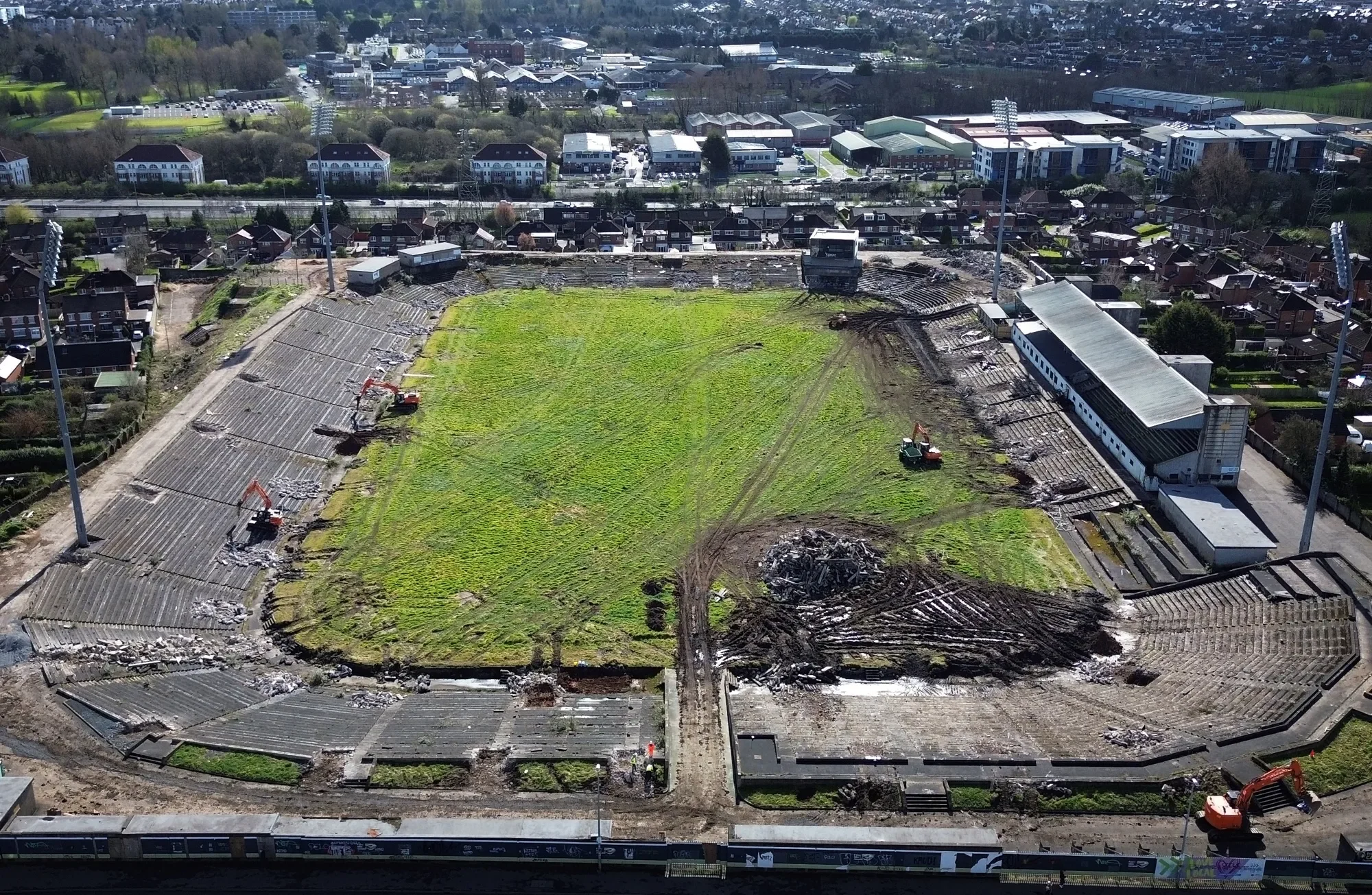
The Euros 2028 will be organised in the United Kingdom and Ireland. In their original Bid it was proposed for all the UK home nations to host matches throughout the tournament. England, Wales and Scotland are still to do so. Northern Ireland however will not host any matches as there is no suitable stadium, as funding to redevelop Casement Park fell through. Rather than looking at the reasons why it fell through, this article examines the potential long-term impact on Northern Irish football using Holger Preuss’ mega event legacy framework.
Holger Preuss defines a mega-sport event legacy as
"all planned and unplanned, positive and negative, tangible and intangible structures created for and by a sport event that remain longer than the event itself."
Northern Ireland’s withdrawal from hosting Euro 2028 was triggered by the UK government's decision not to fund the redevelopment of Belfast’s Casement Park. Reasons cited were the cost, which increased from £77 million to £400 million, and timeline constraints (limited time to actually build the stadium). But what does not hosting a prestigious event mean for a country like Northern Ireland?
Preuss identifies 3 main areas in the legacy definition: planned & unplanned, positive & negative, and tangible & intangible. So let’s examine those.
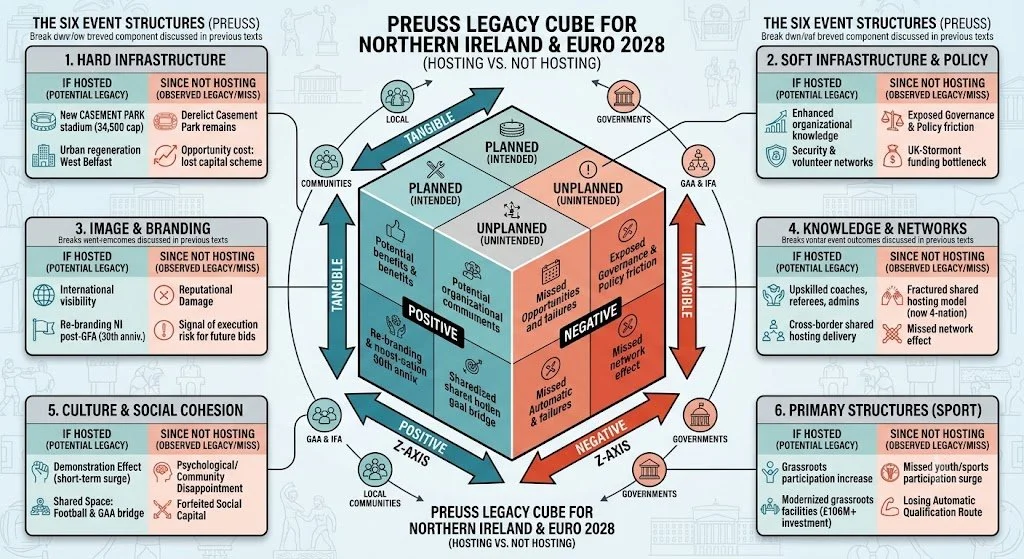
1. Tangible vs. Intangible Legacies
Tangible Legacies (Negative & Unintended):
Missed Physical Infrastructure: The primary planned tangible legacy, a modern, multi-purpose 34,000-capacity stadium at Casement Park and local urban regeneration in West Belfast, was unfulfilled. For now the site remains derelict, leaving an opportunity cost in regional physical infrastructure.
Economic Spending & Tourism : Northern Ireland forfeits direct capital injection from international visitors, fan zones, hospitality, and tournament operational spending.
Intangible Legacies (Negative & Unintended):
Reputational & Brand Damage: A severe negative impact on Belfast’s destination image and branding as a international host city, signaling perceived execution risk for future mega-events.
Psychological & Cultural: Widespread disillusionment among sports communities and a loss of community pride that hosting a global event generates.
2. Planned (Intended) vs. Unplanned (Unintended) Legacies
Failed Intended Legacies:
Cross-Border & Shared Hosting Delivery: The bid was framed as a five-nation collaborative event across the UK and Ireland. Northern Ireland’s exclusion fractures this planned shared legacy, leaving it as a 4-nation host structure instead.
Automatic Qualification Route: Losing host venue status has meant that Northern Ireland’s safety net for automatic qualification to the tournament is no longer there.
Unplanned Legacies:
Exposed Governance & Institutional Friction: The breakdown in decision-making between the UK Government, Stormont, UEFA, and sports governing bodies (GAA and IFA) created a lasting negative soft-infrastructure legacy, exposing political bottlenecks in funding regional capital projects.
Relational Strain: Strained relations and public debate surrounding funding priorities across football and Gaelic games communities.
3. Impact Across Preuss’s Event Structure Domains
-
Hard Infrastructure
Soft Infrastructure & Policy
Image & Branding
Networks & Social Cohesion
-
Negative: No new stadium built; missed urban and transport upgrades around the site.
Negative: Policy failure and distrust in public delivery mechanisms for major capital schemes.
Negative: Positioning shifts from a major event host to a venue drop-out.
Mixed/Negative: Missed opportunity for cross-community integration through sport, though it has forced sharper political debate on long-term sports facility funding.
UTV: why Northern Ireland missed the chance to host Euro 2028
What Could Have Been the Potential Legacy?
The cornerstone legacy was the redevelopment of Casement Park into a modern 34,500-capacity stadium. This would have transformed a derelict urban site into a major sporting, cultural, and entertainment arena alongside broader transport and surrounding commercial upgrades.
From an economic perspective, projections estimated a £106+ million economic injection into Belfast and the wider region through visitor spending, hotel bookings, and tournament operations.
Who Would Benefit and How?
Hoteliers, retail businesses, and food service operators would directly benefit from thousands of visiting fans, international media crews, and tournament staff. This is classified as an [economic] impact rather than an long lasting legacy.
The Gaelic Athletic Association (GAA) would gain a state-of-the-art flagship stadium for Ulster Gaelic games, while the Irish Football Association (IFA) and grassroots football programs would access tournament legacy funding and enhanced participation initiatives.
West Belfast communities would benefit from urban regeneration, increased commercial activity, and temporary/permanent employment created by stadium construction and tournament operations.
What Would Be the Long-Lasting Legacy for Communities?
Preuss emphasises the intangible "social capital" created by mega-events. Hosting Euro 2028 at a traditionally Gaelic venue for a European football tournament represented a historic cross-community bridge, fostering shared spaces between traditional Unionist (football) and Nationalist (GAA) sporting sectors.
Northern Ireland’s civil service and event management sector would retain lasting organisational knowledge, security protocols, and international networking channels for attracting future major sporting and cultural events.
A lasting "demonstration effect" inspiring higher physical activity levels among youth, backed by modernised local sports infrastructure funded by tournament profits. Although there is no proof that staging a mega sports events leads to an increase in sports participation (Weed et al., 2015; Annear et al., 2019)
Across nations that have hosted the European Championship, such as France (2016), England (Women’s Euro 2022), and Germany (2024), the long-term impact on grassroots participation and football development follows a distinct pattern characterised by immediate spikes, structural constraints, and modernised soft infrastructure. Hosting a Euros does not automatically guarantee long-term playing increases; it creates a temporary "window of opportunity." Lasting growth depends entirely on whether national associations leverage tournament momentum to secure long-term facility funding and institutional reform. You can argue that there is an impact, but not necessarily a legacy.
A missed legacy opportunity?
That depends on who you ask. Measuring a legacy is a complex matter. Preuss does well in trying to make somehow sense of it all, but even he argues that there is no one size fits all-answer. Northern Ireland does lose significant immediate benefits: a boost to Belfast's tourism economy, guaranteed qualification, and a new major stadium. However, whether that constitutes a lost "legacy" depends on whether one views the project as a missed transformative opportunity or a fiscal risk that would not have benefited local football anyway.